




Interruptible Agents Are the New Production Baseline

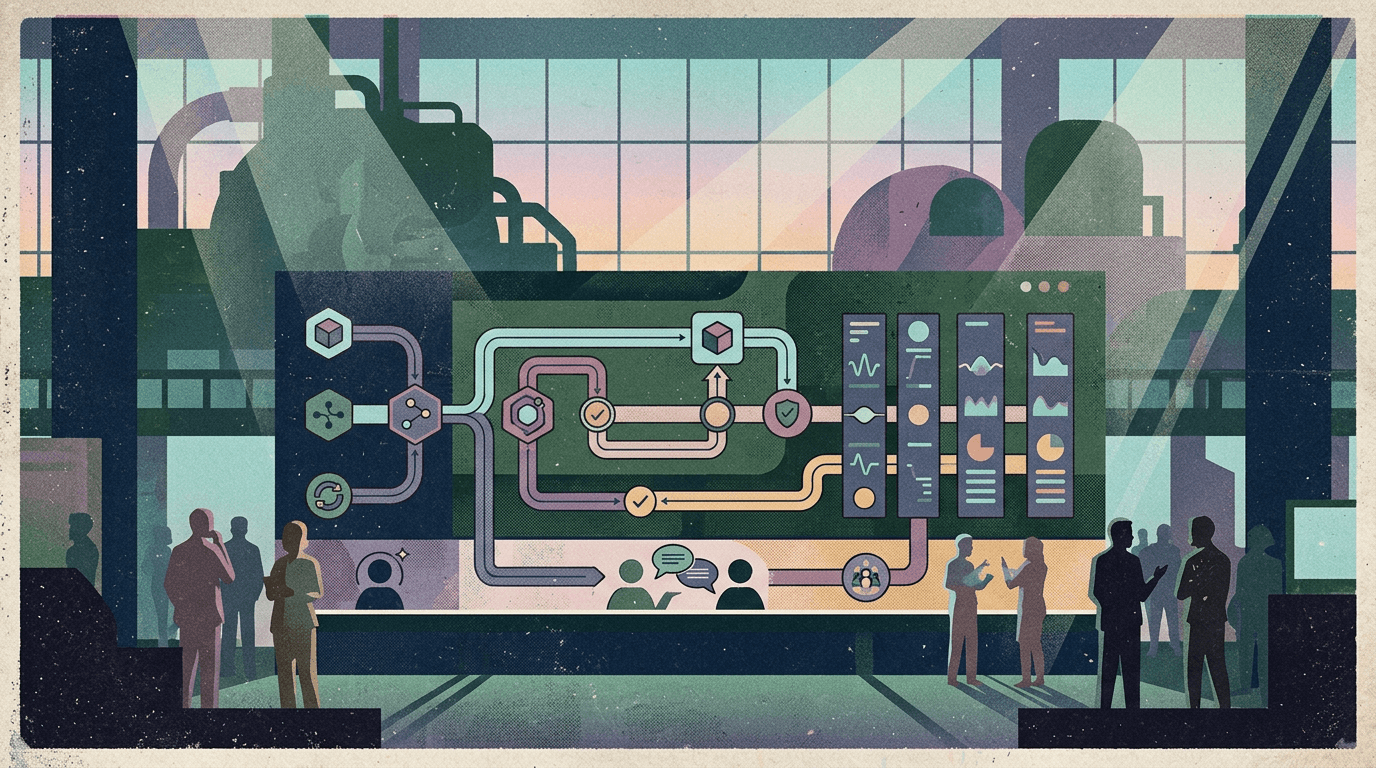
Autonomy is no longer the flex. Interruptibility is.
The signal from the last few days is unusually consistent: the teams shipping real agent workflows are designing for pause/resume, not just "run to completion."
What changed, and why it matters
1) OpenAI is productizing long-running control loops
OpenAI’s latest Responses API updates explicitly add background mode for long-running tasks, plus tracing-oriented reliability features. That is a direct acknowledgment that one-shot request/response is not enough for production agents anymore.
2) Anthropic is reducing context pressure for orchestration-heavy runs
Anthropic’s advanced tool-use release pushes two practical ideas: discover tools on demand (Tool Search Tool) and execute orchestration logic in code (Programmatic Tool Calling). Both reduce brittle context bloat in longer workflows and make multi-step runs more stable.
3) OpenClaw shipped explicit turn-yield mechanics for orchestrators
The latest OpenClaw release adds sessions_yield, so orchestrators can end the current turn immediately and carry follow-up payload into the next turn. That is exactly what production operators need when a workflow must be interrupted, rerouted, or gated before side effects.
4) Builder discourse keeps pointing at architecture, not prompt tweaks
Recent Reddit and Dev.to discussions are blunt: many "agent failures" are structure failures — unclear contracts, poor state handling, and weak recovery paths. The common fix is designing for controlled execution boundaries.
Main argument
The production baseline in 2026 is shifting from raw model capability to control-plane reliability:
- "Can my agent finish the task?"
to:
- "Can my team safely interrupt, inspect, and resume the task without losing control?"
If your system cannot do that, it is not production-ready. It is a demo with a timer.
Practical implications for builders, operators, and teams
- Treat every multi-step workflow as checkpointable, not linear.
- Add explicit human intervention points before irreversible actions.
- Keep tool loading and tool execution scoped per step to avoid context collapse.
- Keep full execution traces and shared operator notes so collaboration survives handoffs.
- Track run-level telemetry: pause rate, resume success, escalation count, and failed side-effect attempts.
- Define restart semantics upfront: what is replayed, what is idempotent, and what is blocked pending review.
Why this matters for OpenClaw users
OpenClaw already gives you the primitives: sessions, tools, routing, memory, cron, and now better orchestration controls like sessions_yield.
But primitives alone do not make teams effective. Teams need a stable shell around those primitives: defaults, visibility, intervention UX, and shared workflows where operators and engineers can move fast without losing governance or human oversight.
That is the Clawpilot layer: OpenClaw as the runtime engine, Clawpilot as the practical operating shell for daily production use.
Closing
The winning agent stack is not the most autonomous one.
It is the one your team can stop, steer, and trust under pressure.