




Audit logs are now a go-to-market feature

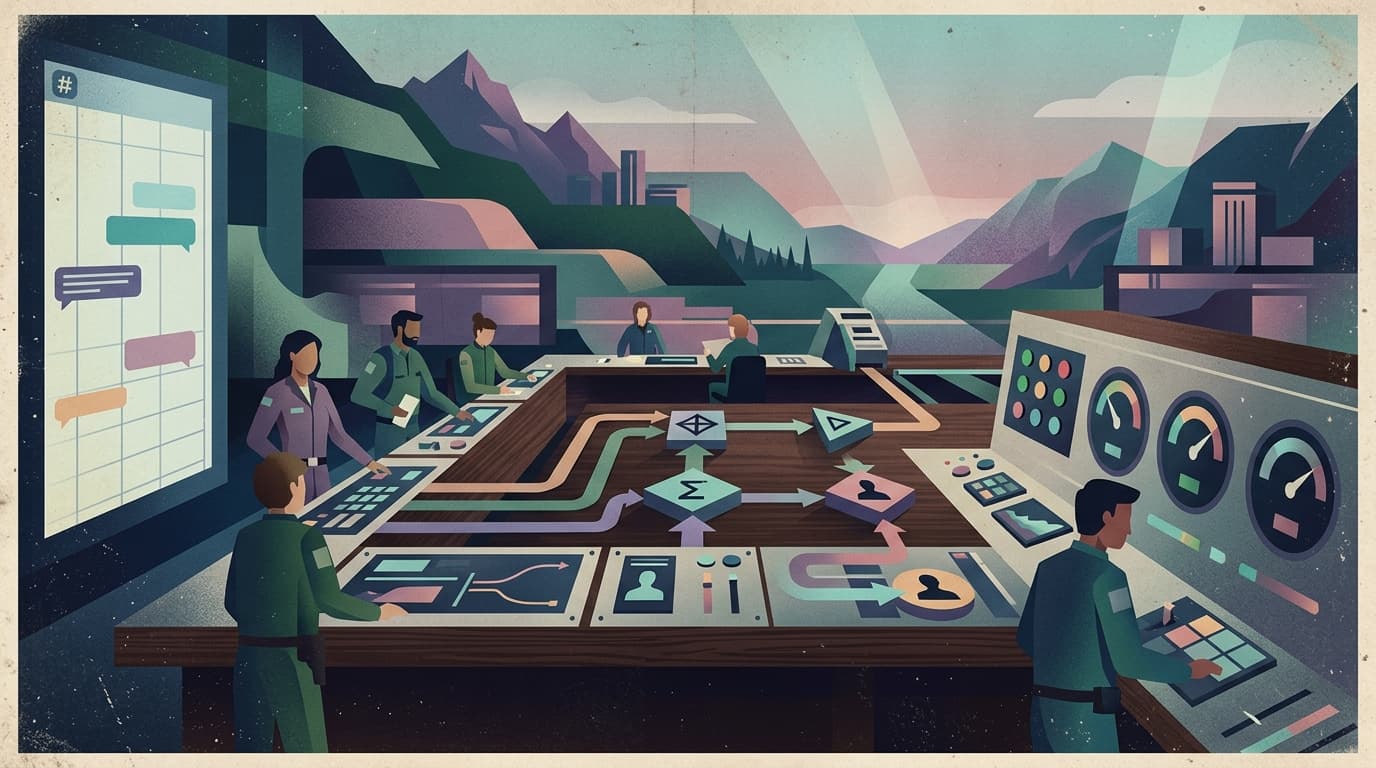
If your agent can’t produce a clean audit log, it’s not an “enterprise agent.” It’s a pilot.
And pilots don’t make it through procurement.
In the last couple of weeks, the signal has gotten louder from two directions:
- LLM platforms are formalizing audit exports and compliance APIs (what happened, who did it, when).
- Work surfaces like Slack are productizing approvals and scoped access (optional scopes, admin-approved skills, “actions with your approval”).
Different products, same buyer behavior: Teams want automation — but only if it’s inspectable, controllable, and blame-free.
What changed and why it matters
Agents are crossing a line from “helpful assistant” to “system that takes actions.” The moment that happens, buyers stop asking:
- “Is it smart?”
…and start asking:
- “Can I prove what it did?”
- “Can I limit what it’s allowed to do?”
- “Can I turn it off fast?”
- “If it breaks something, can I explain it to my boss (or legal)?”
This is why audit logs are suddenly showing up as a headline feature in enterprise AI tools. Not because it’s exciting. Because it removes the single biggest adoption blocker: fear of invisible side effects.
Main argument: the audit trail is the product boundary
Here’s the stance:
In agent software, your “core feature” isn’t reasoning — it’s the boundary that makes reasoning safe to deploy.
The audit trail is where that boundary becomes real. It’s governed speed under human oversight.
It turns “the model decided” into:
- which tool was called
- with what inputs
- under which identity/permission
- what the tool returned
- which human approved it (if required)
- and what happened next
Without that, every incident becomes a vibes-based argument. With it, incidents become manageable.
The non-obvious part: audit logs aren’t just for security
Founders often file audit logs under “enterprise checkbox.” That’s a mistake.
Audit logs are also:
- a sales accelerator (security review goes faster)
- a rollout tool (ops can monitor adoption safely)
- a training system (you can see what people try to automate)
- a debugging primitive (you can isolate the failing step)
In practice, audit logs are how you earn the right to automate more.
Practical implications for founders, product, growth, and ops teams
1) Product: ship an “operator pack,” not just an agent
If you want real teams, ship these primitives early:
- Scoped identities (the agent is someone with permissions)
- Approval gates for risky actions (message sends, data writes, external calls)
- Audit log export with useful fields (actor, time, action, target, outcome)
- Retention and replay story (how long logs exist, what “rerun” means)
- Kill switch / disable at the org level
If any of these are missing, adoption becomes political.
2) Growth: stop selling “magic,” start selling controllability
The easiest way to lose a serious buyer is to sound like:
- “Don’t worry, it’s safe.”
The line that closes deals is:
- “Here’s exactly what it can do, here’s exactly what it did, and here’s how you control it.”
That’s what turns an agent from a novelty into a system.
3) Ops: make visibility the default, not the emergency tool
Ops teams don’t want to open a dashboard only when something breaks. They want a steady-state view:
- which workflows are being used
- which ones need approvals too often (friction)
- where failures cluster
- what actions are being attempted most
That’s how you decide what to standardize into “approved skills” versus what stays ad-hoc.
Why this matters for OpenClaw users
OpenClaw users are building agents that actually do work: tool calls, routing, long-running workflows, and real-world side effects. That means the deployment bottleneck is rarely “capability.” It’s almost always control.
Clawpilot exists because the market is making a simple demand:
Give teams a practical shell that makes OpenClaw deployable in the places they already work — with the admin story baked in.
That looks like:
- Slack-native access (where approvals and accountability already live)
- clear permission boundaries (what the agent can and can’t touch)
- audit trails that security teams can export and understand
- and a control surface operators can use without being the original builder
If you’re betting on OpenClaw, don’t just ship workflows. Ship the governance layer that lets a real org say yes.
Closing takeaway
The new adoption curve for agents isn’t:
- wow demo
- big rollout
It’s:
- small rollout with control
- visible audit trail
- trust
- expansion
If you want daily usage, build the audit log like it’s a core feature. Because now it is.