




Your agent needs work modes, not one default

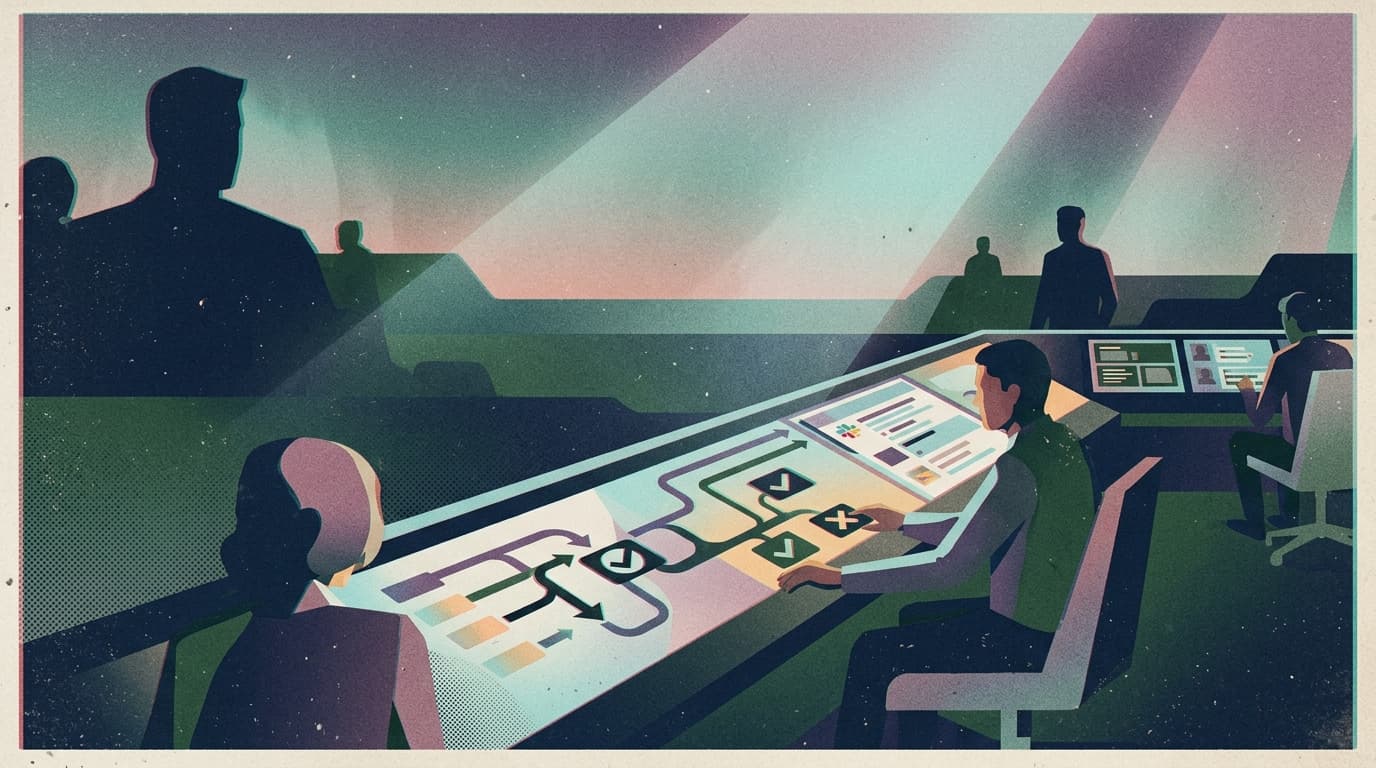
The fastest way to lose an agent rollout is to make every task expensive by default.
Most teams do not need maximum reasoning depth for every workflow. They need predictable throughput, bounded cost, and a way to reserve heavier runs for high-stakes tasks.
What changed and why it matters
In the last 24-72 hours, three signals lined up:
- Major model platforms are shipping explicit effort and speed controls as first-class product features, not hidden tuning tricks.
- Builder discussions are increasingly centered on token spend, authority boundaries, and evaluation discipline instead of pure output quality.
- Operators are sharing more production stories where the failure mode is not “the model was wrong,” but “the system was too expensive or slow for everyday use.”
That combination changes buyer expectations.
Decision-makers now expect agent products to separate low-risk, high-volume tasks from high-effort, high-cost tasks. If everything runs at one intensity, the economics break before adoption expands.
Main argument: mode architecture is now a go-to-market feature
Most agent products still expose one default behavior with minor toggles.
That is no longer enough.
The practical winner is a mode architecture:
- fast mode for repetitive, low-risk throughput
- standard mode for most team workflows
- deep mode for expensive, high-judgment tasks with stronger review gates
This is not just UX polish. It is pricing strategy, adoption strategy, and trust strategy in one move.
When teams can choose the right effort level per task, they ship more work, keep spend under control, and avoid political friction with finance and security.
Practical implications for founders, product, growth, and ops teams
Founders: Stop selling raw intelligence as the headline. Sell controllable throughput by task type. That is what unlocks expansion budgets.
Product teams: Design routing rules that choose modes automatically by risk, deadline, and expected impact. Manual controls still matter, but default automation should handle most traffic.
Growth teams: Package around outcomes by mode instead of one blended usage bucket. Buyers understand this model quickly because it mirrors how teams already triage work.
Ops teams: Track completion rate, cycle time, and cost by mode. If one mode starts absorbing everything, your product is drifting back to one expensive default.
Why this matters for OpenClaw users
OpenClaw gives teams real runtime power. But power without operating modes usually turns into uneven cost, inconsistent speed, and rollout fatigue.
Clawpilot is the practical shell around OpenClaw that makes mode architecture usable in real teams: managed hosting, a clear control surface, and Slack-native operations that help teams run fast paths and deep paths side by side without losing governance and human oversight.
Closing takeaway
The next agent category winners will not be the teams with one smartest default. They will be the teams that make effort level a product primitive and turn that into better adoption economics.