




AI Agent Market Trend (March 2026): Buyers Now Ask Who Owns the Agent When It Breaks

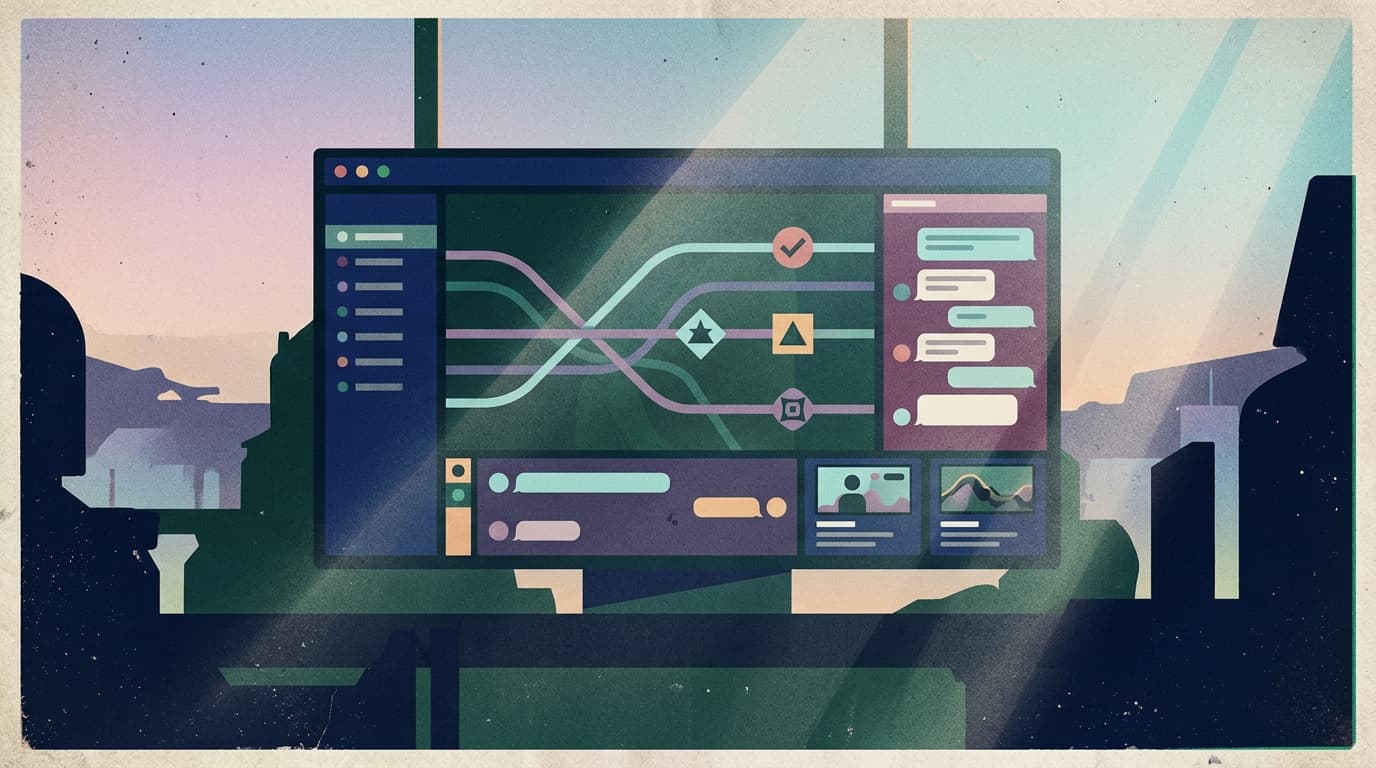
The question has changed.
It used to be: “How smart is your agent?”
This week, in founder and operator conversations, it sounds more like: “Who owns this when it breaks on Tuesday afternoon?”
That is a healthier market signal, and a much harder one.
What changed and why it matters commercially
Recent signals across practitioner discussions and platform updates are pointing in the same direction:
- operators keep reporting that production failures usually come from the operating layer (state, retries, visibility, run control), not from model IQ,
- platform teams are shipping onboarding and control-surface fixes at high velocity,
- enterprise implementation guidance is increasingly formal about authorization, evaluation, and accountable ownership before rollout.
In business terms, this means the buying conversation is moving from capability claims to risk ownership.
If your product can do impressive work but cannot show clear control, buyer confidence drops, rollout slows, and expansion gets pushed to “later.”
Main argument: operational ownership is now a product feature
Strong stance: in 2026, “agent reliability” is too vague. “Agent ownership” is the real product.
Founders who treat ownership as documentation will lose deals.
Ownership has to be visible in-product, through a clear control plane and daily control surface:
- who can approve high-impact actions,
- who sees failures first,
- how recovery happens without heroics,
- how teams learn from runs instead of repeating incidents.
That is not support material. That is core value.
Practical implications for founders, product, growth, and ops teams
For founders
Change your pitch from autonomy to controllable outcomes.
A useful line is not “our agent is smarter.” A useful line is “your team can trust this in live workflows by next week.”
For product leaders
Ship ownership primitives before adding new agent personas:
- clear run history,
- intervention and pause controls,
- role-based approvals,
- predictable recovery paths.
More features without ownership clarity just creates prettier failure.
For growth teams
Your strongest proof asset is a launch story with low incident drama.
Case studies should highlight:
- time to first dependable workflow,
- reduction in manual follow-up,
- how fast teams resolved exceptions.
That sells better than benchmark screenshots.
For ops leaders
Set an adoption gate: no rollout without named owner, governance checks, human oversight, escalation path, and fallback behavior.
If those are undefined, the team is not “moving fast.” It is borrowing risk from next month.
Why this matters for OpenClaw users
OpenClaw gives you serious runtime power: sessions, tools, memory, automation, and flexibility.
But production adoption depends on whether real teams can operate that power safely and repeatedly.
That is where Clawpilot matters.
Clawpilot is the practical shell around OpenClaw that makes ownership visible and usable in day-to-day team operations:
- managed hosting so teams focus on workflows, not infrastructure babysitting,
- usable app/UI so controls are clear beyond terminal-heavy setups,
- Slack-native team access so approvals and actions happen where work already happens,
- operational clarity that helps teams recover fast and keep trust intact.
OpenClaw gives you the engine. Clawpilot gives your team a dashboard, brakes, and shared driving rules.
Takeaway
The market no longer rewards “most autonomous” by default.
It rewards products that make agent ownership obvious, safe, and fast for real teams.
If you want durable adoption, build for the moment things go wrong—not just the demo where everything goes right.