




Agent adoption now depends on the first 10 minutes

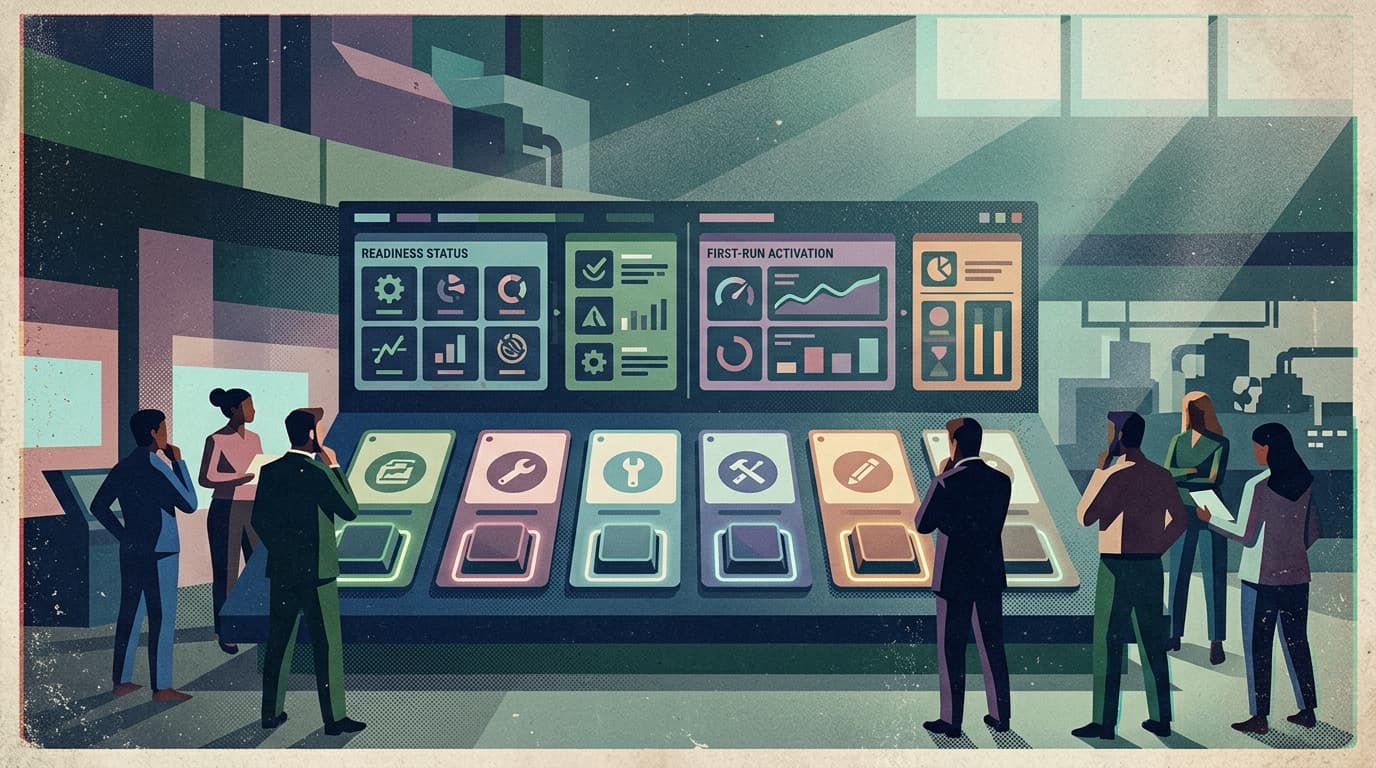
The market keeps talking about smarter agents. Teams keep churning on simpler problems: setup confusion, missing dependencies, and not knowing what the agent can do right now.
This week’s OpenClaw release made that painfully obvious. The headline features were not “bigger model intelligence.” They were practical adoption fixes: clearer /tools visibility, one-click install recipes for missing skill requirements, and UI status filters like “Ready” vs “Needs Setup.”
That is not cosmetic work. That is revenue work.
What changed and why it matters in market/business terms
In the last 72 hours, the strongest product signals in the OpenClaw ecosystem were about reducing first-run friction:
- show only tools the current agent can actually use,
- make setup state obvious,
- reduce dependency dead-ends,
- help teams understand what is immediately operational.
This matters because agent products are now judged by time-to-first-reliable-outcome, not demo quality.
If a founder, ops lead, or PM can’t get a trustworthy win in the first session, they do not “keep exploring.” They deprioritize the rollout.
In business terms: activation friction is now a pricing problem, a conversion problem, and a retention problem.
Main argument: capability is no longer the bottleneck, activation is
Strong take: most agent teams are over-investing in raw capability and under-investing in activation design.
The buyer behavior shift is simple:
- Last year: “Can this agent do impressive things?”
- This year: “Can my team get useful outcomes without babysitting setup?”
If your product needs expert interpretation just to become usable, your TAM is smaller than you think.
The next winners in agent software will look boring on paper:
- fewer ambiguous states,
- clearer actionability,
- less setup guessing,
- faster trust-building loops.
That is what scales from one internal champion to an actual team workflow.
Practical implications for founders, product, growth, and ops teams
Founders
Start tracking one metric aggressively: median time from “workspace created” to “first repeated successful run.”
If it is long, your go-to-market story is leaking, no matter how good your model benchmark sounds.
Product teams
Design for operational clarity before adding more autonomy:
- show what is available now,
- flag what is blocked and why,
- make setup resolution one action, not five docs,
- prevent users from calling tools they cannot run.
Growth teams
Demo the first 10 minutes, not just the best-case 30-second clip.
Your conversion lifts when prospects see:
- clear readiness status,
- fast setup recovery,
- predictable first outcomes.
This reduces the “looks great, never launched internally” gap.
Ops leaders
Adopt a rollout rule: no expansion before activation quality is proven.
That means measuring:
- setup completion rate,
- first-week successful run rate,
- repeat usage by non-builders.
If non-builders are not succeeding, you do not have adoption. You have a pilot.
Why this matters for OpenClaw users
OpenClaw gives teams a powerful runtime and broad flexibility.
But flexibility without operational clarity creates a familiar failure mode: only the most technical person can keep things moving.
That is exactly where Clawpilot matters.
Clawpilot is the shell around OpenClaw that turns “possible” into “usable at team speed” through:
- managed hosting that removes setup drag,
- practical UI surfaces that show readiness and run state,
- Slack-native access so teams can act inside existing workflows,
- an operating layer focused on adoption, not just capability.
OpenClaw is the engine. Clawpilot is how more than one person can drive it.
Closing takeaway
In 2026, agent products do not win on raw intelligence alone. They win when a real team gets a reliable result in the first 10 minutes and can repeat it tomorrow.